Stop being the help desk for “what does this laptop cost?”
Charging hardware back to departments is nobody’s favourite subject. It is also unavoidable in most organisations — and it is usually done once a year, in a spreadsheet, by someone reconstructing twelve months from memory.
The problem is not the calculation. It is that only IT can see the numbers.
1 Set the rules once
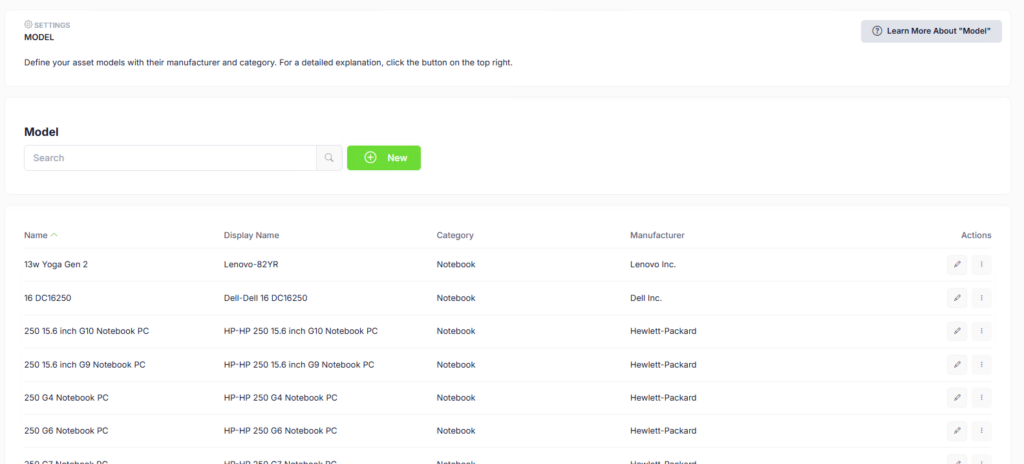
Define what a device type costs per period, and point it at the target that makes sense for you — a cost centre, a location, or a company. Devices that should never be charged go on an exclusion list.
2 Run it, keep the evidence
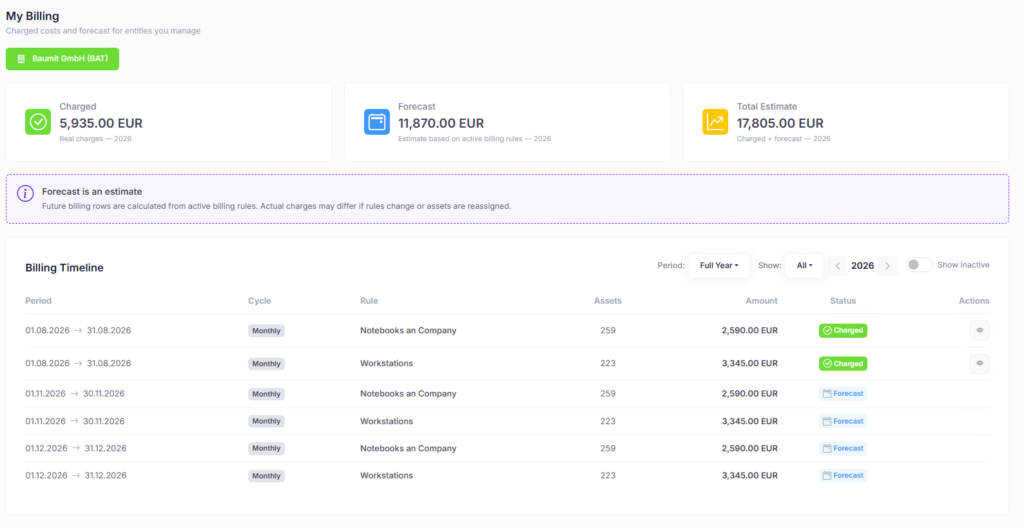
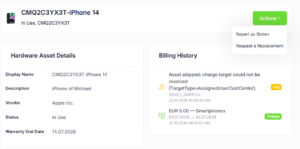
A billing run produces charge records: one line per device, per period. Each record freezes the price, the currency and the target as they were when the run happened.
3 Hand the numbers over
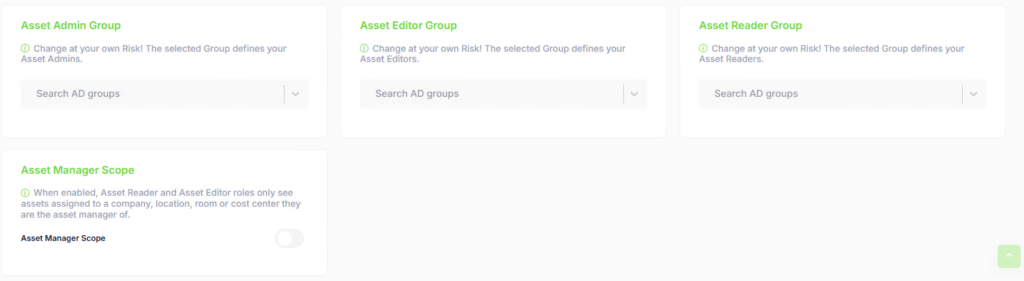
Cost centre owners, location owners — and end users, if you want — see what is about to be charged to them, before it is charged.
“I’m handing that control out. A manager or cost centre owner shouldn’t have to ask — we give it to them. That’s exactly where the value is.”
Michael Seidl, au2mator
Raise a price next quarter and last quarter’s invoice still shows last quarter’s price. When someone questions a charge eighteen months later, the answer is in the record, not in someone’s memory.